
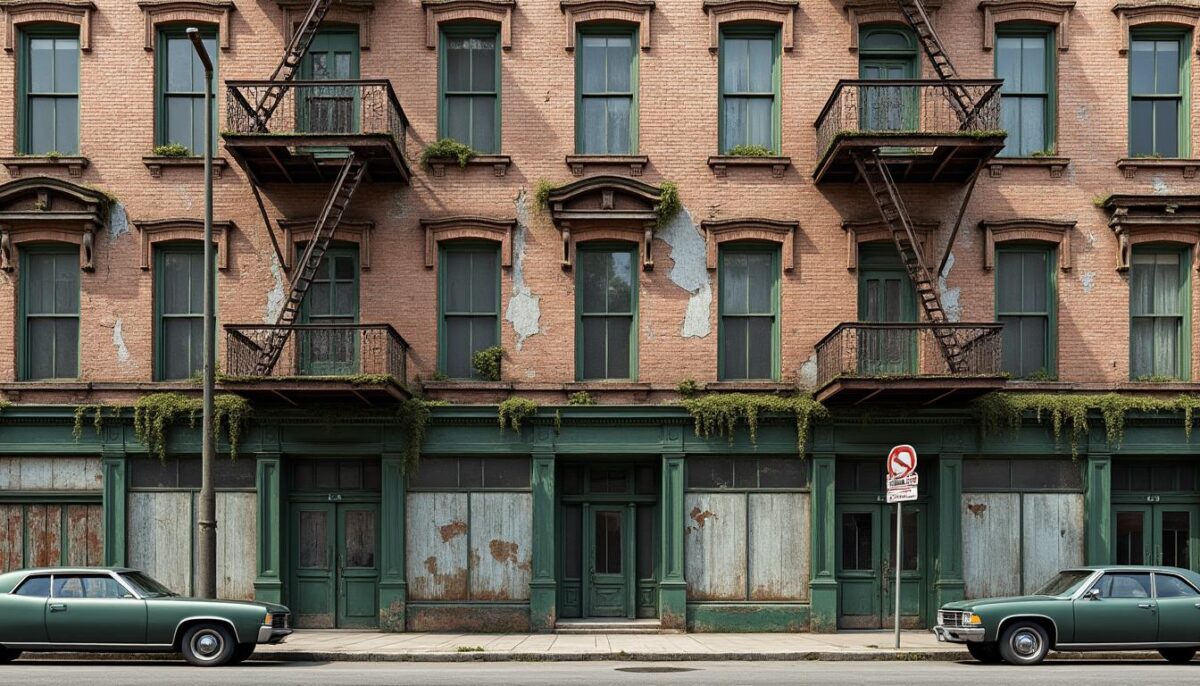
Sale for one symbolic euro: what you need to know
Hello everyone, Lionel here. A sale for a symbolic 1 euro may seem incredible, but it does happen in certain very specific cases. It may involve a building, a house, a plot of land, or a property that is difficult to sell, often with renovation work, charges, or significant constraints. But be careful: a symbolic 1 euro does not mean free. You need to understand notary fees, the property’s real value, tax risks, and the obligations that may come with this type of private sale.
In this article, we break down exactly how this type of purchase works, its tax implications, the notary’s role, and the checks you need to carry out to assess the project’s total cost. If you want to understand how to negotiate this low-priced building purchase and avoid the pitfalls, this article is for you.
You can also find out how to successfully renovate an old building while preserving its character here and how to acquire a building without going through a bank here.
Sale for a symbolic 1 euro: what conditions must be met?
In France, “symbolic 1 euro” refers to the stated sale price, not the budget needed to become the owner. According to the Notaires de France, a sale price must be real and serious; a symbolic price may be accepted, particularly if the property has no value or if other consideration justifies the transfer. This is not a general way to transfer a valuable property at a low price.
Here is what this type of purchase involves:
- The transaction is a genuine property sale, with ownership transferred at the agreed price.
- You need to check the building’s condition, existing rights, and any charges specified in the deed; the seller’s debt is not automatically transferred to the buyer.
- The rules depend on the seller: a transfer by a local authority is not governed by the same framework as a private sale.
- Renovation or occupancy obligations, or restrictions on resale, may be included in the contract; read them carefully.
Before making an offer, gather the title deed, applicable inspection reports, planning documents, and any specifications. Get estimates for the work and check that financing is available. A low price alone does not make up for an unusable building or an overly restrictive contract.
| Advantages | Disadvantages |
|---|---|
| Very low purchase cost | Significant renovation obligations |
| Easier access to property ownership | Deed fees and taxes must be estimated based on the transaction |
| Potential for a good investment if managed well | Tax and administrative risks |
The notary’s key role in securing the sale and preparing a compliant deed
For such an unusual property sale, a notary is essential. Their role goes beyond simply drawing up the deed. In particular, they examine:
- Whether the transaction complies with the legislation in force.
- The justification for the price and any consideration, as well as the risks of a challenge or reclassification.
- Whether the parties have been fully informed of their rights and obligations, particularly regarding charges and taxes.
Ask the notary for a written breakdown before committing: taxes, fees, disbursements, and formalities cannot be reduced to a percentage of one euro. For a public-sector transfer, also have the local authority’s decision and the transaction-specific conditions checked.
Practical steps for buying a building for a symbolic 1 euro
Here are the main steps for completing a property sale for 1 euro:
- Property valuation by an independent expert to justify the price to the tax authorities.
- Review of the conditions for applying, occupancy, renovation work, and resale set by the seller.
- Consultation with a notary to define the terms and carry out legal checks.
- Signing the deed to formalize the transaction.
- Tax registration and updating the property title records.
- Starting the work within the timeframe specified in the contract.
To learn more, find out how an empty building can generate income here and discover the secret behind buildings that never sell here.
| Item | What to obtain before committing | Why? |
|---|---|---|
| Valuation and inspection reports | Applicable documents and estimates, if needed | Understand the property’s real value and constraints |
| Purchase costs | Provisional breakdown from the notary | Avoid an artificially low estimate based on €1 |
| Renovation work and deadlines | Estimates, studies, and an appropriate contingency | Check that the commitments can be financed |
Tax implications: a pitfall buyers and sellers should know about
French transfer tax rules are not limited to the stated price: the BOFiP specifies the tax base, which is based on the relevant price and charges, or on the actual market value if it is higher. The precise tax treatment should be confirmed for the transaction in question.
- Transfer taxes: have the notary determine the tax base and any applicable special rules.
- The seller may still be subject to capital gains tax, despite the minimal price.
- The contract may be reclassified for tax purposes as a gift, resulting in additional taxes payable.
Sample budget: the one-euro price does not measure profitability
Illustrative example, not a valuation: a €1 purchase, €8,000 in fees and studies, €120,000 in renovation work, and an €18,000 contingency already add up to €146,001, before holding and operating costs. You need to compare this total with the value of the renovated property and local demand. No capital gain multiple or resale timeline is guaranteed.
If you are considering renting the property out after renovation, assess the realistic rent, vacancy, charges, future work, and rental conditions. The rental management and investment advice can help you explore this step further, after the legal checks on the purchase.
Cost comparison table: sale for a symbolic 1 euro vs. a standard property sale
| Criteria | Sale at a symbolic price | Sale at market price |
|---|---|---|
| Stated price | €1 in the example presented | Price agreed between the parties |
| Deed fees | Breakdown from the notary required | Breakdown from the notary required |
| Consideration | To be identified and approved | Terms of sale to be reviewed |
| Tax | Not automatically calculated on €1 | Price, charges, and market value must be considered |
| Renovation work | Must be costed; do not deduct its cost based solely on the price | Must be costed based on the property’s condition |
Practical FAQ for buying a building for a symbolic 1 euro
Can you buy any building for a symbolic 1 euro?
No, these types of sales generally involve specific buildings with constraints, offered by local authorities or private owners, often with a renovation requirement.
What are the associated tax risks?
An undervaluation may lead to an adjustment of the tax base. Depending on the facts, reclassification may also be considered. Have the tax treatment and any consideration confirmed with the notary.
Is a notary required?
Yes, a notary is essential to ensure the validity and legal security of the sale, especially at this symbolic price.
What additional costs are there besides the purchase price?
Expert fees, notary fees, and especially renovation costs, which can be substantial depending on the property’s initial condition.
Can you quickly resell a building bought for 1 euro?
First, check the clauses in the deed and the terms of the transfer: some impose commitments or restrict resale. The market and total cost matter too; no quick profit is guaranteed.
Thank you for reading. Warm regards, Lionel