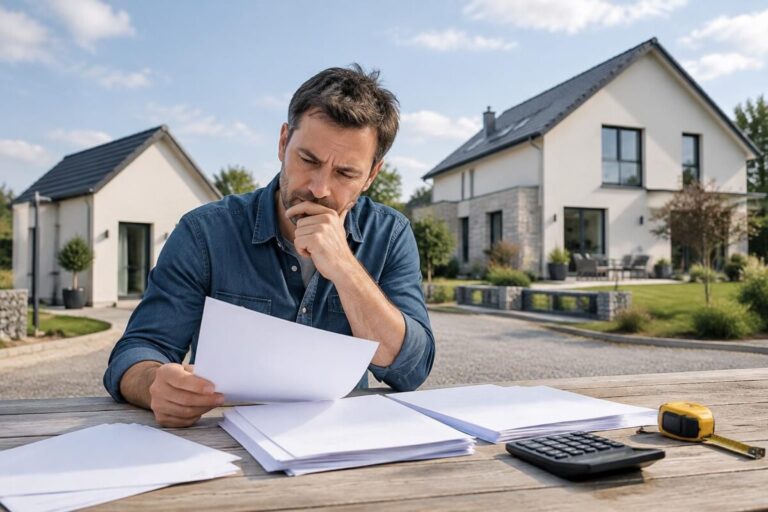
Urban real estate: building farther away to pay less—a trap?
Hi, it’s Lionel.
Building far away can lower the purchase price, but the savings become a trap if travel, utility bills and missing amenities drive up the total cost of the home.
The right comparison therefore goes beyond the price of the land or the cost of construction. It should take into account accessibility, daily transportation and actual expenses over several years.
What to do right away
- Compare the price of the land and home with those in better-connected areas.
- Calculate travel costs based on your actual journeys, not just the straight-line distance.
- Check the public transport, schools, shops and services already available.
- Ask for a full estimate of utility connections, roads and necessary improvements.
- Project your budget over several years, including energy, maintenance and any potential work.
To broaden your analysis, you can consult this guide to the economic pitfalls of urban real estate and this analysis of methods used to reduce certain construction costs.
Building farther away: the purchase price doesn’t tell the whole story
Land far from city centers may cost less, but that advantage doesn’t guarantee a lower final bill. You may have to pay for utility connections, road access or amenities that are already available in developed areas.
Urban sprawl can also put residents farther from work and essential services. The result: more time in the car, dependence on available transportation and travel costs that can eat into the savings made on the purchase.
The useful calculation: compare the total cost of the home
Imagine two projects for the same household. The first costs less to buy, but involves longer journeys and requires an additional car. The second is closer to services and public transport, but has a higher initial price.
To compare the options, calculate each expense over a consistent period: mortgage payments, travel, energy, taxes, maintenance and any potential improvements. An initial saving of a few tens of thousands of euros can disappear if recurring expenses are high.
| Item to compare | Project close to services | Project farther away |
|---|---|---|
| Land price | Often higher | Sometimes more affordable |
| Utility connections and amenities | Often already available nearby | Need to be checked and accurately costed |
| Daily transportation | Potential to reduce car journeys | Depends heavily on available transportation |
| Access to services | Generally more direct | May require regular travel |
| Total cost of the home | High purchase price, potentially lower transportation expenses | Lower purchase price, sometimes higher additional expenses |
This table is no substitute for a quote or a local assessment: the differences depend on the land, utility connections and travel habits. The right choice is the one that remains affordable after all expenses are added up.
Land price and construction cost: two different kinds of savings
Less expensive land directly reduces the purchase budget. However, construction costs also depend on materials, labor, the complexity of the project and local regulations. Building farther away therefore doesn’t automatically make construction cheaper.
Industrialized or prefabricated building methods can help control certain timelines and costs, but their benefits vary by project. Ask for comparable quotes based on the same level of finish, and check what’s included: earthworks, utility connections, access and outdoor improvements.
A practical example to spot a deal that isn’t as good as it seems
Camille and Samir find a less expensive plot outside the city. Before signing, they discover that access to the train station is limited and their work schedules would mean several car journeys each week.
They add subscriptions, fuel, vehicle maintenance and travel time to the budget. The land is still an attractive option, but only after comparing it with an alternative closer to public transport: the “cheaper” label is no longer enough to make the decision.
Distance from city centers: risks to check before buying
A common pitfall is to compare only the price of the land or the monthly payment. But inadequate public transport can make getting around difficult, while a lack of nearby shops or schools affects everyday life and the home’s future appeal.
Also check planning documents and announced infrastructure projects. A future public transport line may improve accessibility, but a proposed project is no guarantee: find out where decisions stand and what the timeline is.
- Mobility: Test the journey at the times you’ll actually need to make it.
- Utilities: Confirm the cost and timeline for connections to water, electricity and sewerage.
- Services: Identify shops, schools and healthcare services you can access day to day.
- Resale: Assess local demand and how easy it is to reach employment hubs.
- Local regulations: Check planning restrictions, natural hazards and easements.
A suburban location may suit a household that works remotely often or has access to good public transport. It becomes less advantageous when every errand requires a long and costly journey.
Three steps to find out whether building farther away is cost-effective
- Prepare two complete budgets. Compare a more distant option with a better-located one, including land, construction, utility connections, taxes and improvements.
- Measure transportation expenses. Estimate weekly journeys, available transportation options and their costs over several years.
- Check quality of life and resale prospects. Look at services, planning regulations, confirmed projects and demand in the area around the home.
This method helps you avoid confusing affordable land with an economical project. If the initial savings hold up after a full calculation and accessibility meets your needs, building farther away may make sense; otherwise, the low price could hide a long-term expense.
Does building far away always cost less?
No. The land may cost less, but utility connections, improvements and travel can increase the total cost of the home.
What costs should you check before buying land far away?
In particular, calculate earthworks, utility connections, access, sewerage, taxes and transportation expenses related to the location.
How can you assess the accessibility of a home in the suburbs?
Test journeys at the times you need to travel and check public transport frequency, proximity to services and options available without a car.
Can land far away increase in value?
It’s possible, but it depends on local demand, jobs, services and infrastructure that has actually been confirmed. An announced project doesn’t guarantee future price growth.
Thanks for reading! Feel free to share your thoughts in the comments. — Lionel