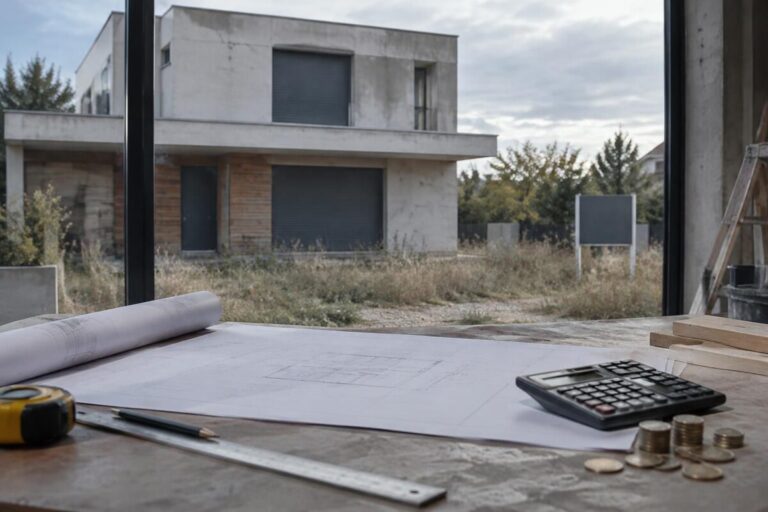

Investment: Small Budget, Big House, or Big Mistake?
Hello, this is Lionel. A large house can be a good investment on a small budget, but only if its price, renovation costs and profitability remain within your means.
Its size can be impressive; the figures, however, show whether the deal makes sense. Before deciding, check the total cost and your exit strategy.
Things to do right away
- Set your total budget, including purchase costs and renovations.
- Calculate your borrowing capacity with monthly payments that leave room for unexpected expenses.
- Get quotes for major renovation work.
- Estimate the rental yield based on realistic rents in the area.
- Set aside an emergency fund to cover hidden costs and delays.
A small down payment doesn’t make buying impossible, but it leaves less room for error. To compare other strategies, also take a look at these ideas for investing in real estate with 200 euros a month and for building a more stable property portfolio.
Large house or small property: what does the budget really say?
A large house listed at a low price may seem more attractive than a smaller apartment. But the purchase price tells only part of the story: heating, roofing, insulation, taxes and maintenance can quickly drive up the bill.
Conversely, a more modest home that is already habitable and located near public transport or services may be easier to rent out. The right choice therefore depends on local demand and the total cost, not the number of square metres.
| Criterion | Large house needing renovation | Small property in good condition |
|---|---|---|
| Asking price | Sometimes low, but check against quotes | Often higher per square metre |
| Renovations | Potentially extensive and difficult to estimate | Generally more limited |
| Rental | Depends on the tenant profile and local demand | May suit a broader rental market |
| Financial risk | Higher if cash reserves are low | Easier to anticipate if the property is in good condition |
Floor space isn’t a return. A less impressive property may deliver more predictable results and preserve your ability to finance a future project.
The low-price trap: hidden costs and renovations
Imagine Samir spots a large house selling well below neighborhood prices. He plans a few renovations, then discovers that the roof needs replacing and the electrical system must be brought up to code: the initial budget is no longer enough.
This situation is not unusual. Hidden costs can include inspections, purchase fees, repairs to equipment and a period without rental income. Without reserves, a promising project can turn into an investment mistake.
- Have costly components inspected: roofing, structure, heating and wastewater systems.
- Get several detailed quotes instead of relying on a rough overall estimate.
- Build in a contingency margin that reflects the building’s actual condition.
- Check that the expected rent is in line with comparable properties actually available in the area.
A potential increase in property value does not automatically make up for years of expenses or an uncertain resale price. A sound project starts with conservative assumptions.
Assessing rental yield without wishful thinking
Gross yield provides an initial benchmark: it compares annual rent with the purchase price. However, it doesn’t account for all expenses, vacant periods or repairs, so it isn’t enough to make a decision.
For example, a house purchased for 120,000 euros and rented out for 900 euros a month brings in 9,000 euros in annual rent, or a 7.5% gross yield before expenses. If renovation and operating costs are high, the actual yield may be significantly lower.
To avoid overly optimistic projections, also test a less favorable scenario: rent below expectations, more expensive renovations or the property standing vacant for several weeks. If the project remains manageable, its financial viability is more credible.
Three steps to take before making an offer
- Calculate the full cost of the deal. Add together the price, purchase costs, renovations, expected expenses and emergency fund.
- Check the financing and demand. Confirm your borrowing capacity with a professional and compare rents for similar homes in the area.
- Make your decision with a safety margin. If the project only works with maximum rent and no unexpected costs, renegotiate or walk away.
This approach helps you distinguish an opportunity from a gamble. A small budget can open the door to a large house, provided you don’t sacrifice the cash reserves that protect the project.
Practical questions before buying a large house
Can you invest in a large house on a small budget?
Yes, if the total cost, financing and renovation work remain manageable. The asking price isn’t enough: budget for purchase fees, renovations and a reserve for unexpected expenses.
What rental yield should you aim for with a house?
There is no universal threshold. Compare realistic rents with local expenses, then calculate the yield after expenses and vacancy, not just the gross yield.
How can you limit financial risk before buying?
Have the building inspected, get detailed quotes, test an unfavorable scenario and check that the monthly payments fit your budget.
Does renovation work guarantee an increase in property value?
No. The value created depends on the cost of the work, the quality of its execution and local demand at the time of resale.
Thanks for staying with me until the end! Your thoughts and experience are always welcome. — Lionel