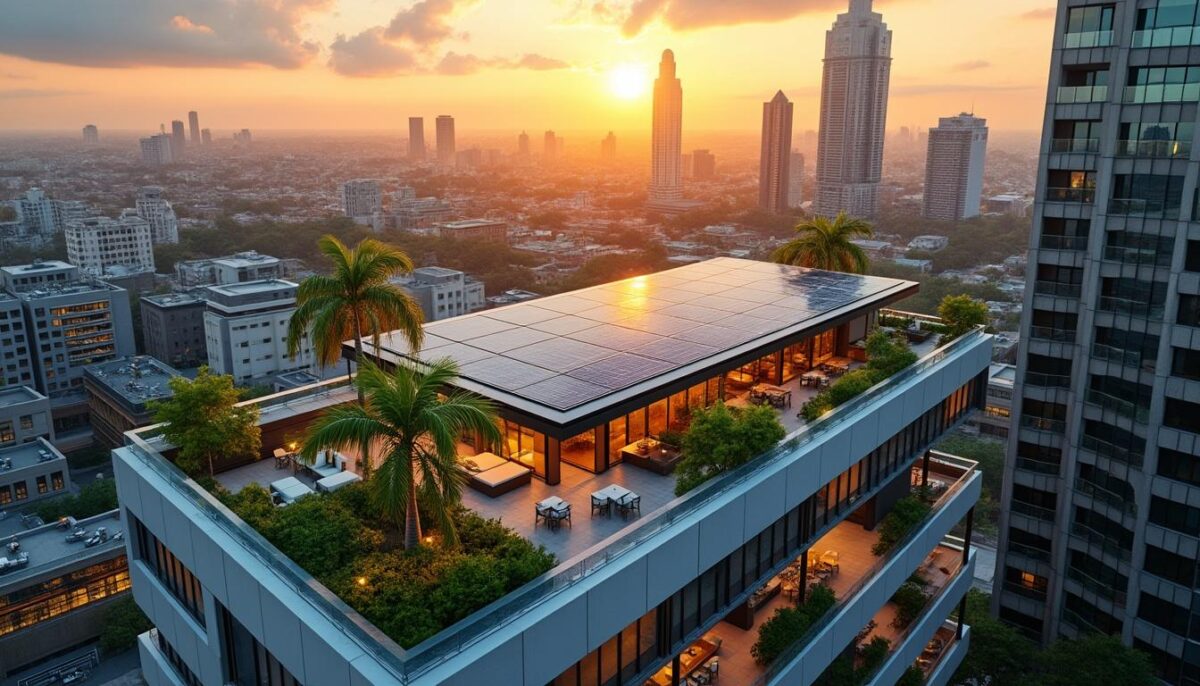
Flat Roofs: Advantages, Limitations, and Points to Check
Hello everyone, Lionel here. A flat roof, or roof terrace, allows for compact architecture and can accommodate certain uses, but it requires well-designed waterproofing, drainage and maintenance. It is not automatically more economical, better insulated or convertible into a terrace. Here are its advantages and limitations to help you choose based on your building, rather than on a trend-driven promise.
Their role now goes beyond simply looking good. Thermal performance depends on the complete assembly, the insulation, thermal bridges and moisture management. Vegetation does not replace insulation. Solar panels can be considered after checking the load capacity, wind exposure, shading and maintenance access. To better understand this trend, it is worth discovering how to make an unused roof profitable.
Flat roofs: a way to optimize urban space
It is important to distinguish a roof that is inaccessible and reserved for maintenance from one designed for people to use. Its flat appearance alone does not prove that it has sufficient load-bearing capacity or is safe. The Agence Qualité Construction points out that the intended use of a roof terrace must not be changed without an appropriate assessment: do not turn a technical roof into a place to relax simply by adding paving slabs.
For a solar or green-roof project, request an assessment of the supporting structure and the entire waterproofing system. Equipment, wet growing medium and foot traffic add different loads. A successful conversion can provide practical value, without guaranteeing an increase in property value or energy independence.
Why choose a flat roof for your property project?
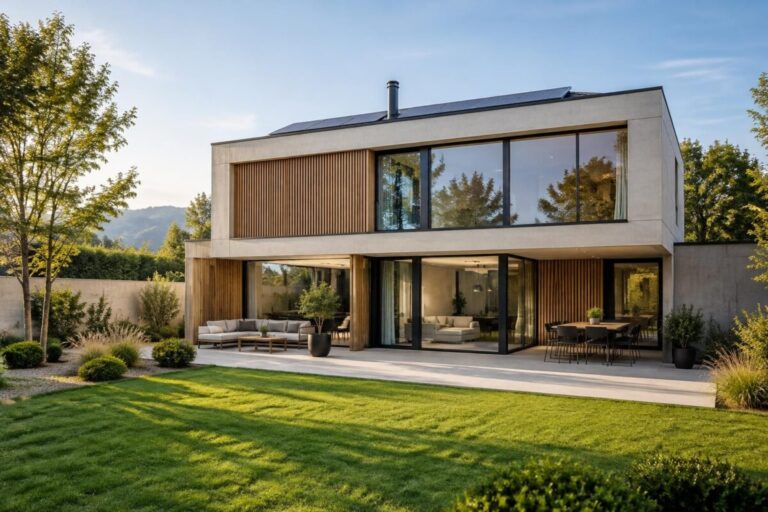
- Clean, contemporary look: A flat roof enhances the architecture with its straight lines and minimalist appearance.
- Multifunctional space: A terrace, urban vegetable garden, leisure area or support for renewable technologies.
- Improved thermal performance: Performance depends on the insulation system; a green roof does not replace it.
- Environmental contribution: Creates a habitat for urban biodiversity and helps regulate urban heat islands.
- Maintenance to plan for: Drainage outlets, upstands, joints and safe access must be monitored according to the system.
Flat roofs: waterproofing, insulation and maintenance come before optional features
A so-called flat roof may have a slight slope, determined according to the supporting structure and the system used: do not choose a one-size-fits-all value without an assessment. Water must drain to the designated outlets, and upstands and penetrations require particular care. Choose insulation and a waterproofing system approved for the intended use, loads and supporting structure; being bio-based alone is not enough.
Plan to check the drainage outlets, joints and upstands, and call in a professional when access is not safe or the system requires it. Leaves and debris can obstruct water flow; do not puncture the membrane to add a fixing. The roof insulation and waterproofing advice can help you explore these points before considering a terrace, plants or solar panels.
Comparison table of the benefits of flat roofs by use
| Intended use | Potential benefit | Essential check | Limitation |
|---|---|---|---|
| Green roof | Vegetation and management of some rainwater | Load at saturation, drainage, waterproofing and maintenance | Does not replace insulation |
| Solar panels | Local electricity generation | Loads, wind uplift, shading, fixings and permits | No guaranteed energy independence |
| Accessible terrace | Usable outdoor space | Intended use, structure, guardrails, access and permits | An inaccessible roof is not a terrace |
Before choosing: compare overall costs and constraints
Compare quotes covering the same scope: structure, insulation, waterproofing, drainage, protection, access and maintenance. A pitched roof and a roof terrace may meet different needs; there is no option that is always cheaper. Check planning rules and, in a condominium, obtain the necessary approvals before making any changes.
For an existing roof, gather the plans, its original intended use, invoices, inspection records and any history of leaks. If you notice a water stain, dampness or faulty drainage, have the cause diagnosed before covering or converting the roof. Do not go up without suitable access and protective measures.
What are the main environmental benefits of flat roofs?
The effects depend on the design and how the roof is used. Suitable vegetation can support biodiversity and manage some rainwater; the flat shape alone does not guarantee a better environmental or thermal performance.
Can a flat roof be converted into a living space?
Only if its intended use, structure, waterproofing, safety measures and permits allow it. An inaccessible roof must not be used as a terrace without an appropriate assessment and work.
Are flat roofs suitable for all types of buildings?
They are particularly well suited to modern buildings, whether detached houses or urban apartment blocks, thanks to their contemporary design and functionality.
Which materials should be chosen for an eco-friendly flat roof?
Choose a complete system that is compatible with the supporting structure and intended use: insulation, vapor management, waterproofing and protection. Check the system’s technical documents and have the designer approve your choice.
How can you finance the installation of an eco-friendly flat roof?
No grant is automatic just because a roof is flat or green. Check the current schemes and the precise eligibility of the work before starting the project, with France Rénov’ or the relevant local organizations.
Thank you for reading. With friendship; Lionel