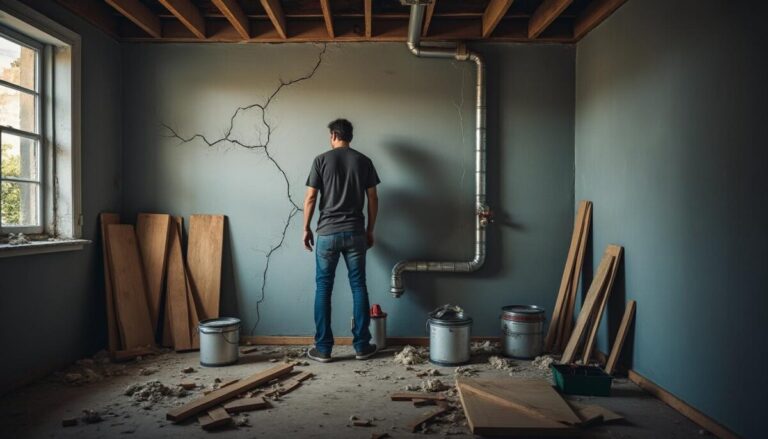

Investing in a Home: 7 Mistakes to Avoid Before Signing for the Land
Hello, this is Lionel.
Before signing for a plot of land, check its zoning rules, soil, easements, and total cost: these checks help avoid unpleasant surprises.
Buying a plot of land can be the start of a great real estate investment, provided you don’t rely solely on the asking price. Here are the mistakes to avoid before committing.
Good habits to adopt
- Ask for the applicable zoning rules and check that they match your plans.
- Have the soil assessed before finalizing the plans and budget.
- Identify any easements and confirm the exact boundaries of the plot.
- Estimate the cost of utility connections, access, and site preparation work.
- Get your mortgage financing approved and review the contingencies before signing for the plot.
To better assess a plot with constraints, also see our guide to narrow plots and their development constraints, as well as this article on cheap plots and the cost of the neighborhood. These checks give you a more accurate picture than the price alone.
Seven mistakes to avoid before signing for land to build on
A plot may seem ideal during a viewing, then become complicated as soon as your plans run up against zoning rules, soil conditions, or utility networks. Imagine Camille, who finds an attractively priced plot: before committing, she needs to check every item that could affect her project.
| Mistake | What to check | Risk avoided |
|---|---|---|
| 1. Relying on the listing | Consult the zoning documents and request a planning certificate suited to the project. | Finding out that the planned house cannot be built. |
| 2. Neglecting the soil survey | Review the available geotechnical information and request an appropriate survey. | Underbudgeting for foundations or technical adaptations. |
| 3. Ignoring easements | Read the notarial documents and check for rights of way or affected utility networks. | Losing some of the intended use of the plot or complicating construction. |
| 4. Forgetting utility connection costs | Get estimates for utility connections and access to the networks. | Discovering significant costs after the purchase. |
| 5. Confusing total area with usable land | Have the boundaries confirmed and review any building placement constraints. | Being unable to position the house as planned. |
| 6. Calculating only the price of the land | Add acquisition costs, earthworks, utility connections, and applicable taxes. | Exceeding the construction budget. |
| 7. Signing without securing financing | Have the financing plan and contingency clauses reviewed by the relevant professionals. | Being committed even if the loan or project does not go ahead. |
Mistake 1: Assuming the plot is buildable for your project
The designation “buildable” does not guarantee that you can build the house you have in mind. Local zoning rules may regulate the building footprint, height, exterior appearance, or distance from the boundaries.
Ask the town hall for the applicable documents and have the feasibility of your project confirmed, in particular by requesting an operational planning certificate. The right check is about your specific house, not just the plot.
Mistake 2: Underestimating the soil survey
Soil conditions affect the foundations and the cost of the work. A slope, filled ground, or clay soil may require adaptations; a visual inspection is not enough to assess them.
Gather any existing surveys, then ask a professional for advice on the geotechnical survey appropriate for the plot and the project. Compare the cost of this check with the potential consequences of poorly designed foundations.
Mistake 3: Failing to identify easements
A right of way, a pipeline, or another easement may limit the use of part of the plot. These constraints are not always obvious during a viewing.
Ask the notary to review the title deeds and documents relating to the plot. If an access route or utility network crosses the land, check exactly where it runs and what that means for the placement of the house.
Mistake 4: Forgetting the cost of connecting utilities
A plot without utility connections may need connections for water, electricity, sewage, or telecommunications. The distance to the networks and the access work will affect the bill.
Get estimates from the utility providers and check the connection requirements before signing. Don’t confuse a utility network running along the street with a connection already installed on the plot.
Mistake 5: Assuming the entire area is usable
The advertised area does not always correspond to the space actually available for building. Boundaries, the shape of the land, the slope, required setbacks, or a narrow access route may limit your options.
Have the boundaries professionally surveyed and ask a professional to test the placement of the house you have in mind. A simple plan can often reveal early on that a garage will be difficult to fit or that the garden will be much smaller than expected.
Mistake 6: Forgetting the costs associated with construction
The purchase price is only one part of the overall project. In addition to acquisition costs, you may have to pay for earthworks, utility connections, access, applicable taxes, and some landscaping.
Camille can compare two plots by adding up all these costs rather than automatically choosing the cheaper one. Also set aside a safety margin, often around 10 to 15% of the construction budget, depending on the project and possible unexpected costs.
Mistake 7: Signing without conditions that suit your financing
A bank’s agreement in principle is not a substitute for a final mortgage offer. Before making any commitment, check that the timeline and conditions of the promise or preliminary sale agreement match your mortgage financing and construction project.
Have the documents reviewed by the notary and ask which conditions precedent are appropriate for your situation. A well-drafted clause can protect your project if an essential condition is not met.
Before signing for land: a three-step check
- Gather the documents. Request the zoning rules, information about easements, boundary survey, and any available studies.
- Get the full project costed. Check the soil, utility connections, access, and additional costs with the relevant professionals.
- Secure your commitment. Have the preliminary agreement reviewed and confirm that its conditions match your project and financing.
If anything remains unclear, postpone signing until you have obtained written documentation. An attractive plot should still make sense once the constraints and costs have been factored in.
What documents should you check before buying a plot of land?
In particular, request the applicable zoning rules, documents relating to easements, boundary survey information, and any available soil surveys. The notary and town hall can direct you to the documents relevant to your project.
Is a soil survey always necessary before signing?
The need depends on the plot, the information available, and the planned construction. Have a professional assess the situation and check the requirements applicable to the plot before committing.
How can you estimate the cost of connecting utilities to a plot?
Get estimates from the utility providers and check the distance to connection points, access, and the work required. A utility network nearby does not mean a connection has already been installed.
What should you include in the budget besides the price of the land?
Add acquisition costs, earthworks, utility connections, access, applicable taxes, and a contingency for unexpected costs. Get estimates rather than relying on a rough overall figure.
I hope you found these tips helpful. See you soon! — Lionel