
Affordable modern architecture: real solution or fleeting dream?
Hello, Lionel here. Affordable modern architecture is possible, provided you simplify the plan and keep an eye on the total cost, not just the construction price. A compact, well-oriented home designed without unnecessary details can remain contemporary without sacrificing comfort. The real pitfall is confusing upfront savings with long-term savings.
Things to do right away
- Set an overall budget that includes the land, utility connections, studies, taxes, and finishes.
- Compare at least three quotes with the same level of services.
- Choose a compact shape: fewer projections often mean fewer walls, less roofing, and less complexity.
- Choose materials based on their full cost, including installation and maintenance.
- Set aside a 10 to 15% contingency to cover unexpected costs during construction.
To weigh construction against renovation, also check out this comparison of the cost of a new-build or renovation project and these tips for keeping the style without overspending. These guidelines help distinguish genuinely affordable modern architecture from a simple teaser offer.
Low prices come down to design choices
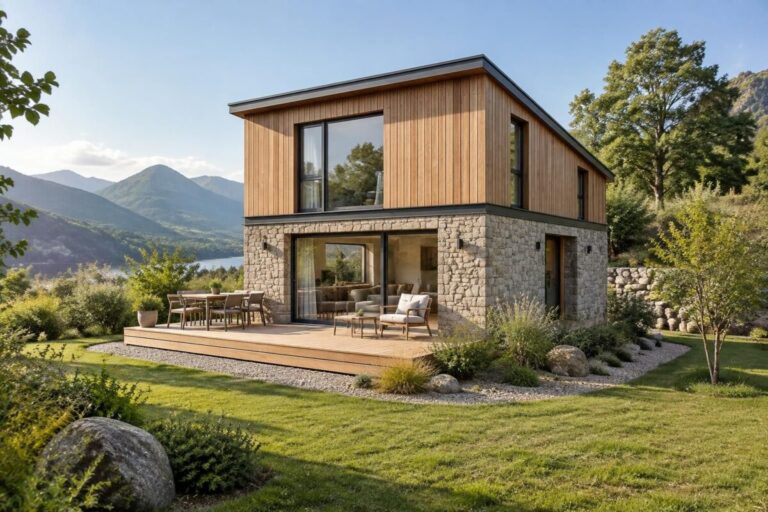
A home built on a tight budget doesn’t have to be ordinary. A simple form, an efficient layout, and minimalist design reduce costly items while leaving room for a well-finished façade or beautiful natural light.
Prefabricated homes and modular construction can also speed up the project and limit some costs. But the advertised price does not always include transportation, foundations, utility connections, or landscaping. Always compare the price of a completed, move-in-ready home, not just the price of the building itself.
Affordable materials that suit the project
Affordable materials can deliver good results if their lifespan and maintenance are taken into account. An economical cladding, for example, may require more maintenance than a finish that costs more upfront.
Long-term durability also depends on the quality of the workmanship. A well-insulated building envelope and sound energy efficiency can reduce running costs, even if they slightly increase the initial budget.
Compare options without relying on the teaser price
Imagine Nora and Sami, who are on a tight budget and aiming for a home of around 90 m². They are choosing between a simplified traditional build, a prefabricated model, and a modular home. Their comparison should focus on the services actually included and the site constraints.
| Option | Potential advantage | What to check |
|---|---|---|
| Custom compact plan | Tailored to needs and site | Fees, timelines, and plan complexity |
| Prefabricated home | Controlled factory production | Transportation, foundations, and options |
| Modular construction | Potentially quick assembly | Utility connections, site access, and finishes |
Price differences vary considerably depending on the region, soil, regulations, and level of finish. Nora and Sami therefore request a detailed estimate for each option instead of relying on a standalone per-square-meter estimate. The right choice is the one that stays within the total budget without creating hidden costs.
Three steps to keep the cost of a contemporary home down
- Define your essentials. Floor area, number of rooms, thermal comfort, and location come before decorative options.
- Have the site and project assessed. Soil, access, and zoning constraints can affect the final cost.
- Compare quotes item by item. Check exclusions, timelines, warranties, and price adjustment terms.
This approach helps you avoid cutting back on features that protect comfort and the property’s value. Cost optimization works best when it starts at the design stage, before plans and technical choices are finalized.
Savings that last
A striking façade or highly sophisticated equipment isn’t essential for modern architecture. Good orientation, a high-performance building envelope, and well-sized windows can make a greater difference in everyday life.
However, avoid cuts that compromise the structure, waterproofing, or insulation. Deferring spending on an essential item can lead to costly repairs; it’s better to reduce the options than the quality of the workmanship.
Can a modern home really cost less?
Yes, if the plan is compact, the shapes are simple, and the specifications are clearly defined. The land, utility connections, and finishes must be included in the overall budget.
Is a prefabricated home always more affordable?
No. Prefabrication can help control some costs and timelines, but transportation, foundations, utility connections, and options can narrow the gap. Compare complete, equivalent offers.
Where can you cut costs without compromising quality?
You can simplify the shape of the building, limit underused spaces, and defer some finishes. Avoid cutting corners on the structure, waterproofing, and thermal performance.
What contingency should you set aside for unexpected costs?
A reserve of around 10 to 15% of the construction budget is a prudent guideline. Adjust it based on the condition of the site, how well-defined the project is, and the risks identified.
Thanks for reading! I’d love to hear your thoughts in the comments. — Lionel